What Happens During Lot Prep on Rocky Arizona Property?
April 17, 2026 6:13 pm Leave your thoughtsIf you have ever driven through the Sonoran Desert or the high desert terrain around Prescott, Payson, or the White Mountains, you already know that Arizona land is not exactly forgiving. Rocky outcroppings, caliche layers, steep grades, and unpredictable soil conditions are part of the deal when you buy raw land in this state. Before any foundation gets poured or any framing goes up, a carefully planned sequence of work has to happen first. That process is called lot prep, and for anyone planning to build in Arizona, understanding what it involves can save you serious time, money, and frustration.
Understanding the Terrain Before Work Begins
The first step in any serious lot prep project is getting a thorough read on what you are actually dealing with. In Arizona, that means a soils investigation and, in many cases, a geotechnical report from a licensed engineer. Rocky Arizona properties can vary wildly from one parcel to the next. You might have a lot that looks flat and manageable on the surface but hides a thick caliche hardpan just a foot or two below grade. Caliche is a calcium carbonate layer that forms naturally in arid soils, and it is notoriously difficult to excavate without heavy equipment or blasting.
Before any equipment rolls onto the site, surveyors establish property boundaries and identify setbacks. Grading plans are reviewed and approved by the local jurisdiction. Utility easements are flagged. Any protected vegetation, including saguaro cacti, must be identified and handled according to Arizona state law, which strictly governs the removal or relocation of native plants. Skipping these early steps is a costly mistake, because discovering a protected plant or a buried rock shelf after you have already started cutting into the ground puts the entire project on hold.
This early phase also includes a review of access. Rocky terrain often means steep or winding driveways, and the driveway approach must meet fire department and county standards before any construction permit gets issued.
Clearing, Grubbing, and Rock Removal
Once the planning and permitting phase wraps up, the physical work of lot prep begins with clearing and grubbing. Clearing refers to the removal of surface vegetation, shrubs, brush, and trees from the build area. Grubbing goes deeper, targeting root systems, stumps, and any organic material that would otherwise decompose beneath a foundation and cause settling.
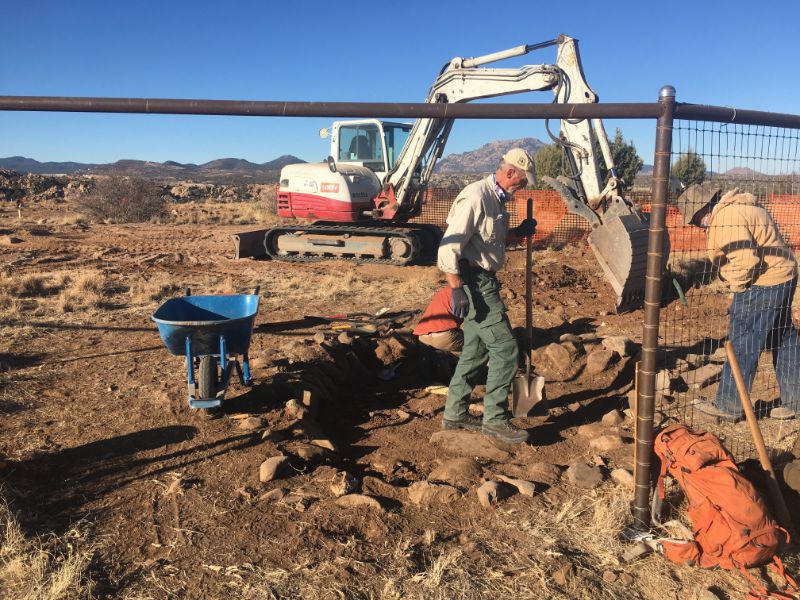
On rocky Arizona property, clearing and grubbing are only the beginning. Rock removal is often the most expensive and time-consuming part of the entire lot prep process. Depending on the size and depth of the rock, crews may use hydraulic excavators with rock hammer attachments, bulldozers with rippers, or in cases of very large formations, controlled blasting under the supervision of a licensed blasting contractor.
Large boulders that cannot be broken on-site must be hauled off. Smaller fractured rock material can sometimes be crushed and used as base material for the driveway or compacted fill in other areas of the lot. Experienced grading contractors who know Arizona terrain will often find creative ways to put that material to use rather than paying to haul it all away, which can reduce overall project costs significantly.
Grading, Drainage, and Compaction
After clearing and rock removal, the lot gets shaped. This is where house pads and lot prep really come together as a unified process. A house pad is the precisely graded and compacted area of earth where your home’s foundation will sit. Getting this right is one of the most critical steps in the entire construction sequence.
Grading for house pads and lot prep in Arizona involves cutting and filling the land to achieve the elevation and slope specified in the engineered grading plan. On a sloped or rocky property, this can mean cutting deep into one area of the lot and using that material as fill in another. Imported fill material, usually engineered fill that has been tested and certified, may also be brought in if the native soil does not meet compaction requirements.
Drainage is a major consideration in Arizona, particularly because the monsoon season delivers intense, fast-moving rainfall that the desert soil cannot absorb quickly. Grading must be designed to direct water away from the house pad and toward appropriate drainage swales, basins, or natural drainage corridors. Poor drainage planning on a rocky lot can lead to erosion, foundation undermining, and flooding during heavy storms.
Once the rough grading is complete, compaction testing begins. A geotechnical engineer or testing firm will run nuclear density tests or other approved methods to verify that the fill material meets the minimum compaction percentage required by the building department, typically 90 to 95 percent of maximum dry density. If the tests come back low, additional compaction passes are required before work can move forward.
Utility Rough-In and Site Infrastructure
With the pad graded and compaction verified, the site is ready for underground utility work. This phase includes trenching for water lines, sewer or septic systems, electrical conduit, gas lines, and communications infrastructure. In rural Arizona, where municipal services may not be available, lot prep also includes site work for well drilling and septic system installation.
Rocky terrain creates real challenges during utility rough-in. Trenching through caliche or solid rock requires specialized equipment and adds time to the schedule. In some cases, horizontal boring or directional drilling is used to get utilities under obstacles without cutting through them.
Septic system design in Arizona is regulated by the Arizona Department of Environmental Quality, and the system must be sized and placed based on soil percolation tests. On a rocky property, finding an area with sufficient soil depth and the right percolation rate for a septic system can shape where the house pad itself ends up being located. This is another reason why the planning phase matters so much before any dirt gets moved.
After utility trenches are backfilled and compacted, the site is typically brought to finish grade. This means fine grading the pad and surrounding areas to the exact elevations called for in the approved plans, preparing everything for foundation work to begin.
Permitting, Inspections, and Final Sign-Off
Lot prep is not complete just because the physical work is done. Before a foundation can be poured, the grading and site work must pass a series of inspections by the local building department and, in many cases, the county engineer. These inspections verify that the grading matches the approved plans, that drainage features are correctly installed, and that compaction testing documentation is on file.
In Arizona counties with active construction, like Maricopa, Pinal, or Yavapai, inspectors are thorough and the process can take time. Rural counties may have fewer resources, which sometimes speeds up inspections but can also mean less predictable scheduling. Building a good relationship with your local building department early in the project pays off during this phase.
Environmental sign-offs may also be required if the lot prep work disturbs soil near a wash or drainage area regulated under the Army Corps of Engineers or the Arizona Department of Environmental Quality. These clearances must be in hand before foundation work can legally proceed.
Conclusion
Lot prep on rocky Arizona property is a complex, multi-phase process that combines careful planning, heavy excavation, precise grading, and rigorous inspection. House pads and lot prep work set the literal foundation for everything that comes after. Cutting corners at this stage creates problems that are expensive and sometimes impossible to fix once the home is built. Working with experienced Arizona grading contractors and engineers who understand the unique challenges of desert terrain is the single best investment you can make before breaking ground.
Need Excavating Contractors Near You?
At Kelmac Excavation, Inc., we take pride in delivering dependable, high-quality excavation, septic, demolition, and hauling services backed by decades of hands-on experience and a commitment to fair pricing. As a family-owned business, we value every project and every customer, and we work hard to ensure the job is done right the first time. Whether you need a small repair or a large-scale excavation, we are ready to help you move forward with confidence. Contact us today to discuss your project and get your free estimate.
Categorised in: Lot Preparation Services
This post was written by admin